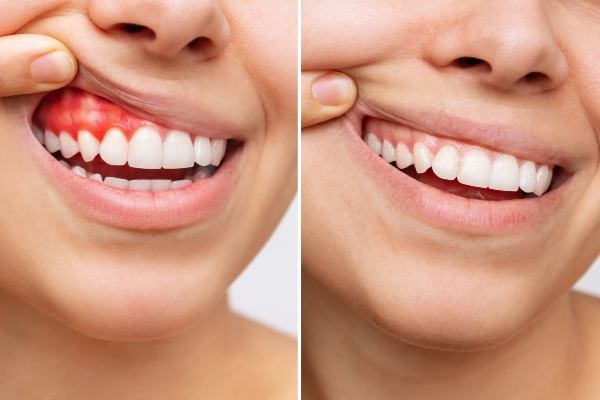
 Gum disease treatment is crucial for your oral health. Gums deteriorate because of aging or infections. Studies show that treating this issue can improve your general health as well. Here are the things you need to know about gum disease treatment.
What this treatment is all about
Dentists use many dental procedures in gum disease treatment. Dental care providers use them to reduce pain and infection in the mouth. These procedures rebuild the damaged periodontal tissues. A dentist who works with gum tissue can provide detailed attention to any stage of gum disease.
Gum disease develops when tartar and plaque build up on the dental surfaces. The gums react to irritants and bacteria. They then become tender and swollen. Gum bleeding may also occur during flossing and brushing. Studies reveal that early gum disease treatment can reverse the symptoms of early stages of infection.
Later stages of gum disease result in gum and jawbone damage. This condition results in periodontal pockets and gaps. These developments can lead to more infection and even tooth loss. Gum disease treatment will be more detailed at this stage.
The options
Statistics show that about half of adults at least 30 years old have gum disease. Almost 9% of adults need advanced gum disease treatment. The procedure depends on many factors, including the ability to follow aftercare instructions. The dentist can offer non-surgical and surgical treatment options. Sedation dentistry can help keep the patient feeling comfortable during the procedure.
Non-surgical gum disease treatment options
These treatments are for people with early-stage periodontal disease. Dentists often offer these treatments to reverse or reduce the symptoms. Each gum disease treatment below may or may not need dental sedation. Here are the common ones:
- Scaling and root planing is also known as deep cleaning. This gum disease treatment reaches underneath the gumline to remove tartar and plaque.
- Dental prophylaxis is regular dental cleaning. This treatment should happen two times a year. The dentist will remove plaque and tartar from dental surfaces.
- Laser periodontal therapy is a gum disease treatment that uses a laser to kill bacteria under the gums. It also removes diseased tissue without sutures or incisions.
- Antibiotic therapy uses antibiotics to remove bad bacteria from the gums. The dentist places these medications between the gums and teeth.
Surgical gum disease treatment options
In severe cases of periodontitis, the patient will need traditional surgery. Guided tissue regeneration places a membrane in the gum tissue’s damaged section. The treatment helps bone to regenerate around the tooth. The dentist may help with this process with bone grafting.
Gum grafting uses synthetic, donated, or the patient’s tissue to treat gum recession. This is a common type of gum disease treatment. The dentist will place a tissue graft on the area with severe gum recession. Sutures will keep it in place. Bone grafting uses synthetic, donated, or the patient’s bone to rebuild the sections that gum disease damaged. The dentist can perform this gum disease treatment with pocket reduction surgery.
The right gum disease treatment can help you gain better oral and general health
Gum disease is a silent destroyer. Regular checkups can determine if the condition is already at its early stages. Gum disease treatment, often non-invasive, must start then. More advanced stages will need more intrusive procedures. Working with your dentist can help you regain your oral health and well-being.
Request an appointment or call Marea White, DDS at 817-803-4691 for an appointment in our Bedford office.
Related Posts
A successful gum disease treatment is important for your oral health. Restoring the health of gums and teeth needs the right procedure and maintenance. It also needs mindfulness after the appointment. Understanding what you must do to support your gum disease treatment results can help prevent complications.Keeping an eye on one’s oral care habits is…
Maintaining excellent oral health is essential to avoid gum disease treatment and its potential complications. Gum disease, or periodontal disease, is a common but preventable condition caused by plaque buildup on teeth and gums. Untreated gum disease can lead to gum inflammation, tooth loss, and even systemic health concerns. By adopting a proactive approach to…
Gum disease treatment addresses the underlying causes of gum inflammation and infection to restore oral health. Among the most effective procedures for combating this condition is a deep cleaning called scaling and root planing. This non-surgical treatment helps target plaque and tartar buildup beneath the gumline, contributing to the condition's progression.Gum disease (periodontal disease) is…